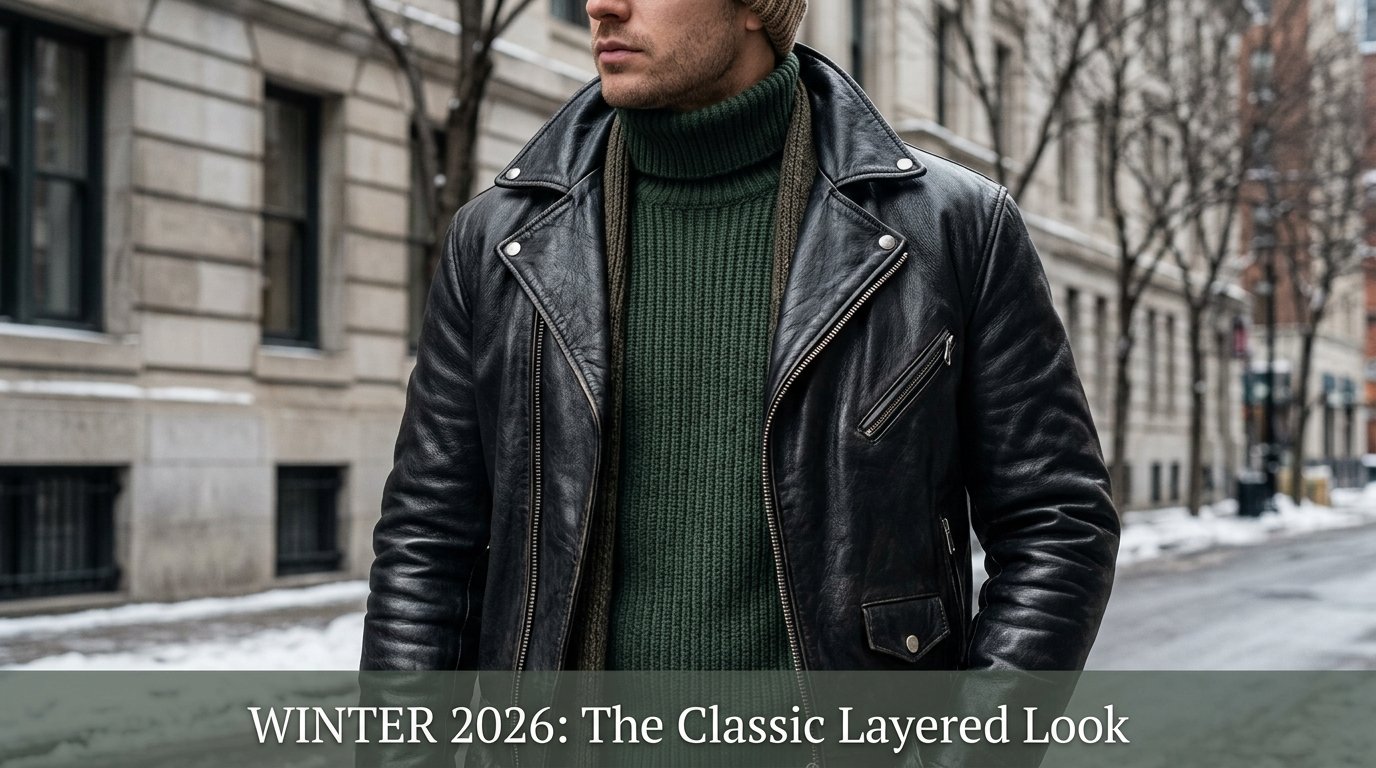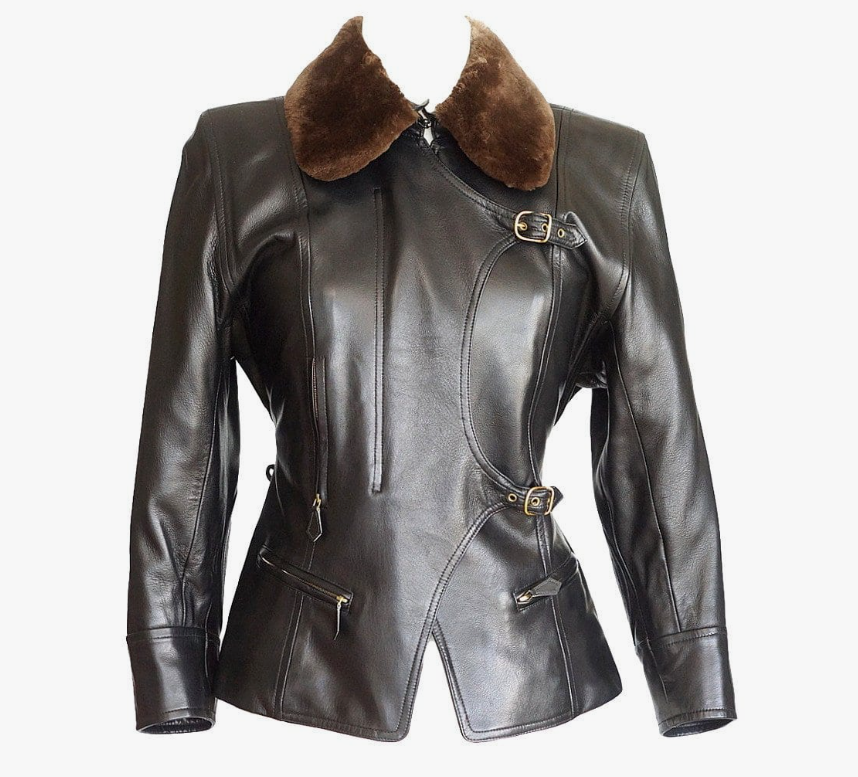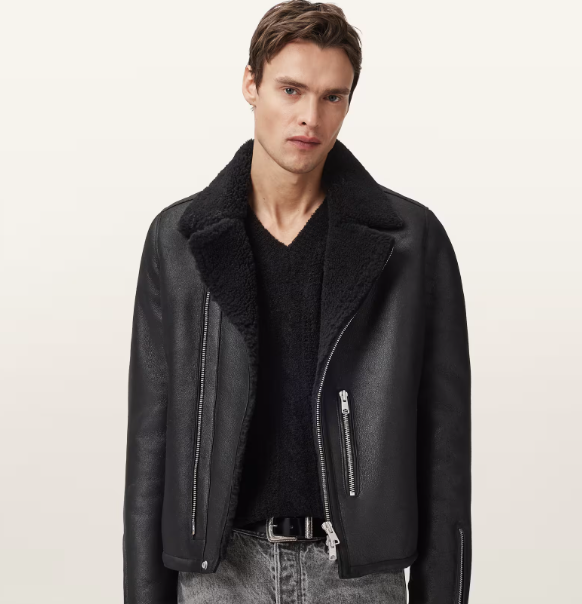

Last February I stood in my closet shivering in a tee and jeans because my only good winter coat sat in a charity shop bag, its lining torn. I had sworn I would replace it before the cold snap. I never did. So I spent three weeks layering two hoodies under a rain jacket like a teenager who had lost a bet. That miserable month taught me the truth about men’s winter clothing style: a wardrobe is a small team of pieces that actually work, and when one key player quits, the whole season falls apart.
This guide is not about outfits or trends. It is about the clothes themselves: which pieces to own, what makes a good one, and how to spend your money once instead of twice. Nail men’s winter clothing style at the garment level and everything else follows.
What Pieces Make Up Great Men’s Winter Clothing Style?
Great men’s winter clothing style comes down to thirteen pieces: one serious coat, one insulated jacket, three to four sweaters, two flannels or overshirts, thermal base layers, two pairs of winter trousers, leather boots, casual waterproof shoes, plus a wool scarf, gloves and beanie. Own these and you are covered from November to March, and men’s winter clothing style becomes a forty-second decision each morning.
The mistake most men make is buying twenty mediocre things instead of thirteen good ones. Build a rotation where everything goes with everything else, and getting dressed looks deliberate.
The One Coat Rule: How to Buy Winter’s Hardest-Working Piece
If your budget stretches to one great purchase this winter, make it the coat: it is the only garment people actually see. A good coat over a plain sweater reads as expensive; a cheap coat over expensive clothes reads as cheap. That is the brutal economics of men’s winter clothing style (GQ).
Pick the type that fits your life. A man who walks to the office needs something different from a man who drives everywhere, and most men do best with two coats: a smarter one and a tougher one.
| Coat type | Best for | Warmth |
|---|---|---|
| Wool overcoat | Office, evenings, smarter days | High with layers |
| Puffer jacket | Cold commutes, weekends, travel | Very high |
| Parka | Wet, windy, brutal weather | Very high |
| Peacoat | Everyday smart casual | Medium to high |
| Quilted jacket | Mild cold, driving, layering | Medium |
On quality, flip the coat inside out. You want a lined interior, flat seams, firmly sewn buttons, and dense fabric. A wool blend with 60 to 80 percent wool is honest value and lasts for years. Always try it on over a sweater, not a tee.
Unpopular opinion: a black coat is the worst choice for most men, not the safest. It shows every speck of lint, fades to a sad grey after two seasons, and half your street owns the same one. Navy, charcoal or camel hide wear better.
Mid Layers: The Sweaters and Shirts That Actually Keep You Warm
The mid layer is where warmth is made, and where most men waste money on acrylic knits that pill by Christmas. In men’s winter clothing style, natural fibres are the whole game. Merino regulates temperature, resists odour, and stays warm even when damp. Cashmere is softer but wears through faster.
A mid layer lineup that earns its closet space:
- Two merino crewnecks, one navy, one grey or oatmeal. The backbone of everything.
- One chunky cable knit in cream or forest green for texture and insulation.
- One turtleneck in black or charcoal for serious warmth.
- Two flannel shirts in checked patterns, for mild cold or under sweaters.
- One wool overshirt, your casual Friday outer layer.
On fit, a sweater should skim your torso with a finger’s width of ease, shoulder seams on your actual shoulders. Too tight and you cannot layer under it; too loose and it looks borrowed (FashionBeans).
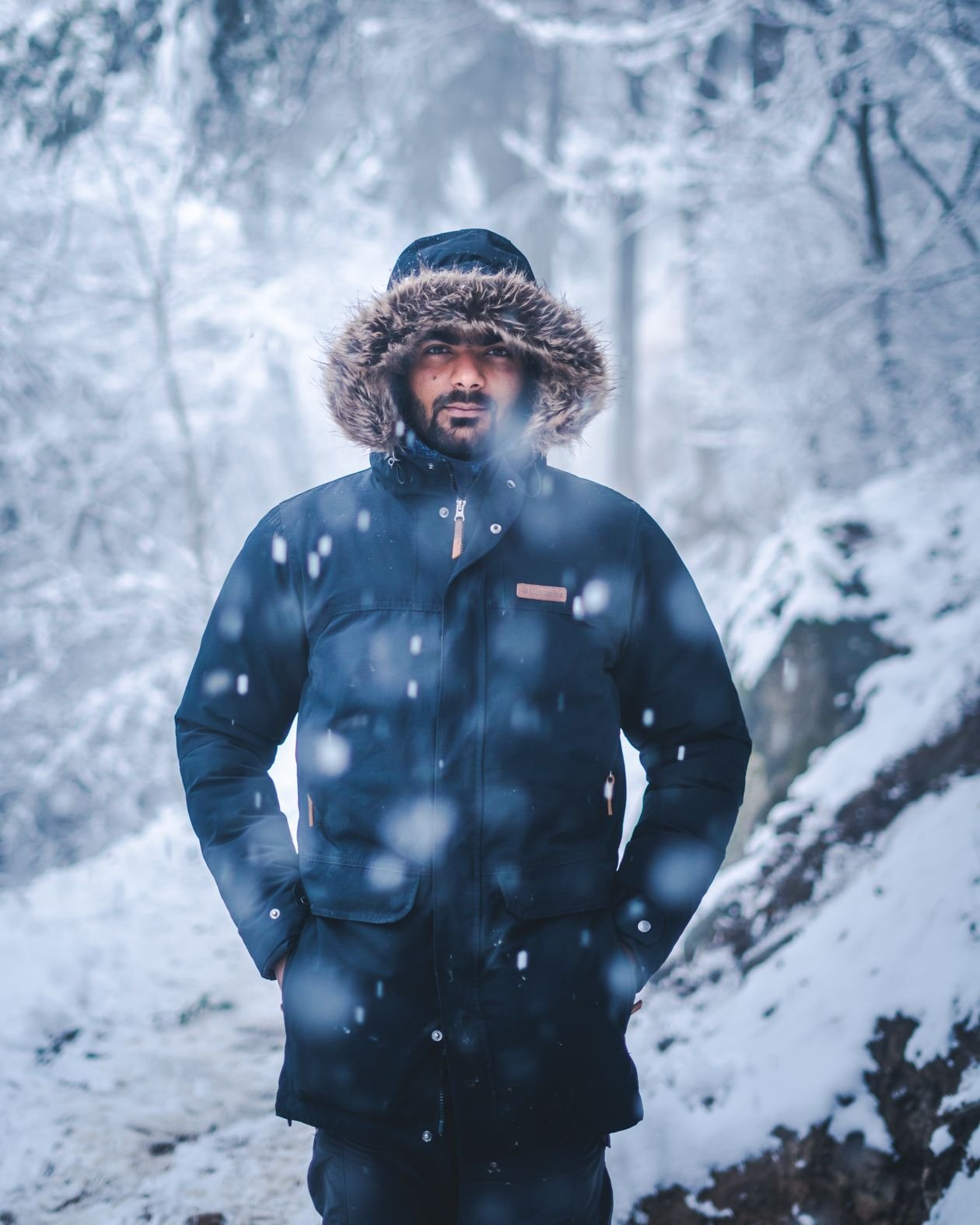
The Base Layer: Warmth You Cannot See
The base layer is the least glamorous purchase in men’s winter clothing style and the best value per pound. A thermal set adds roughly the warmth of an extra sweater with zero visible bulk.
Merino thermals cost more but feel better all day. Synthetics dry faster and survive the washing machine, making them the practical pick for commuting. Fit should sit close to the skin without pinching.
Trousers, Boots and the Bottom Half of Winter
Men obsess over coats and forget that cold comes up from the pavement. Good men’s winter clothing style needs two upgrades below the waist: heavier trousers and footwear with grip.
For trousers in men’s winter clothing style, weight is everything. Flannel wool is the winter classic: brushed fabric traps warm air and works from office to dinner. Corduroy is the casual hero, warmer than plain cotton by a wide margin. Heavyweight denim (14oz and above) beats thin stretch jeans, which go cold and clammy.
Boots are non-negotiable where winter means rain, slush or ice. Check these five things before you buy:
- Rubber lug soles with real tread, not smooth soles that turn into ice skates.
- Leather uppers with sealed seams, or waterproof-treated suede at minimum.
- A gusseted tongue (stitched to the sides), which stops water sneaking in.
- Insulation or room for thick socks, so your toes survive the bus stop.
- A heel you can actually walk in on wet pavements.
One pair of dark leather Chelsea or lace-up boots covers most winter days; add casual waterproof shoes for the worst weather and your feet are done. Waterproof leather boots before winter; ten minutes doubles their weather resistance — see How to Style a Biker Jacket in Winter: Cozy Looks That Work.
Accessories, Colour and Care in Men’s Winter Clothing Style
Accessories are the cheapest upgrade in men’s winter clothing style. A wool scarf, leather gloves and a beanie in colours that match your coat make a plain outfit look finished. Three accessories maximum, all in the same colour family.
Colour is where winter wardrobes quietly win or lose. Warm neutrals like camel, charcoal, navy, chocolate brown and olive mix with almost everything, while forest green and burgundy add personality. Keep expensive pieces neutral; let cheap pieces carry colour.
Care is the part nobody reads and everybody needs. Wash wool and cashmere rarely and gently, dry flat away from heat, and air sweaters between wears. Hang coats on wide hangers and store everything with cedar or lavender to deter moths (Real Men Real Style).
How to Build Your Winter Wardrobe in 7 Steps
You do not need to buy everything at once. Follow this order and each purchase makes the rest of your men’s winter clothing style work harder.
- Audit what you own. Try everything on and donate what pills, smells of damp, or no longer fits.
- Buy the coat first. Start hunting in October when stock is full.
- Add base layers next. One set transforms everything you own.
- Fill the mid layer gap. Two merino crewnecks and one flannel shirt give you instant rotation.
- Sort your feet. Buy boots before the first freeze and break them in on dry days.
- Finish with accessories. Scarf, gloves and beanie in one colour story, bought last.
- Schedule care day. Waterproof boots and de-pill sweaters twice a winter.
Spread spending across two or three months and quality men’s winter clothing style stays manageable. Such a wardrobe typically runs £1,200 to £2,000, but over years of wear that is cheap per outing.
How many winter coats does a man actually need for good winter clothing style?
One good coat is enough, and two is ideal: a smarter wool coat for work and evenings, plus an insulated puffer or parka for harsh weather. Each lasts longer when rested between wears, since the fabric airs out.
What is the warmest fabric for men’s winter clothing style?
Wool is the warmest practical everyday fabric because its fibres trap air and keep insulating even when damp. Merino suits layers against the skin, dense woven wool suits coats, and down or synthetic fill suits the coldest jackets.
How should a winter coat fit over layers?
A winter coat should close over a sweater with about an inch of ease at the chest, and you should be able to hug yourself without the back pulling. Sleeves end at the wrist bone. Always try coats on over a sweater.
Can you nail men’s winter clothing style without spending a fortune?
Yes, because men’s winter clothing style depends more on fit and fabric than on brand names. A well-fitting wool-blend coat and clean boots in a simple colour palette will out-dress an expensive logo outfit that fits badly. Spend on the coat and boots, save on the rest.
How do I stop my winter sweaters from pilling?
Wash wool and cashmere inside out in cold water with a gentle wool detergent, and never tumble dry them. Rest sweaters between wears so fibres recover, and remove pills with a fabric comb or de-piller rather than pulling them off.
Conclusion
Men’s winter clothing style is simple once you stop thinking in outfits and start thinking in pieces. One great coat, honest knitwear, base layers nobody sees, trousers and boots that handle the weather, accessories that tie it together: that is the whole game. Buy fewer things, buy them once, look after them.
Ready to start your men’s winter clothing style upgrade? Do the coat audit this weekend, then work through the seven steps one purchase at a time. To see how these principles apply to specific jackets, read What to Wear Under a Leather Jacket in Winter 2026 and Can a Biker Jacket Keep You Warm in Winter? 9 Outfit Ideas.
About the Author
Biker Jacket Hub Editorial Team: we are a small team of menswear writers and editors who spend our winters testing coats, boots and knitwear in real cold weather, not just photographing them. Every guide we publish is researched, hands-on, and written to help you buy better and waste less.