I bought my first “nice” watch at a department store sale when I was 26, and I picked it the way most guys pick their first accessory: it looked cool on the display, the price tag had a red line through it, and I wanted to feel like an adult. I wore it for two weeks. It was a massive silver chronograph with about nine tiny dials I couldn’t read, it caught on every shirt cuff I owned, and it made my skinny wrist look like a kid wearing his dad’s watch. That is how not to pick men’s accessories.
The truth is, nobody teaches you how to pick men’s accessories. You either stumble into good taste by wasting money on bad purchases, or someone shows you the ropes. Consider this the conversation I wish someone had sat me down for before I bought that ridiculous chronograph. Picking accessories is not about fashion rules from magazines. It is about matching pieces to your life, your clothes, and the guy you actually are.
Start With Your Life, Not the Accessory
How to pick men’s accessories starts with an honest look at your week, not a shopping list. A lawyer who wears a suit five days a week needs completely different pieces than a college student who lives in hoodies. Before you spend a cent, answer three questions.
First, what do you wear most days? Your accessories have to live with your actual wardrobe, not the fantasy one. If your closet is jeans and t-shirts, a gold tie bar is useless to you no matter how classy it looks online.
Second, what does your day look like? If you work with your hands, a delicate dress watch will get destroyed by Friday. If you are at a desk, you can wear finer pieces without worry. Your lifestyle picks your accessories more than your taste does.
Third, what is your budget reality? One good two-hundred-dollar watch beats five forty-dollar watches that break, tarnish, or embarrass you. When you are learning how to pick men’s accessories, fewer and better wins every time.
The Big Three: Where Every Man Should Start
If you own nothing, start here. These three pieces cover ninety percent of situations and they teach you how to pick men’s accessories for everything else later.
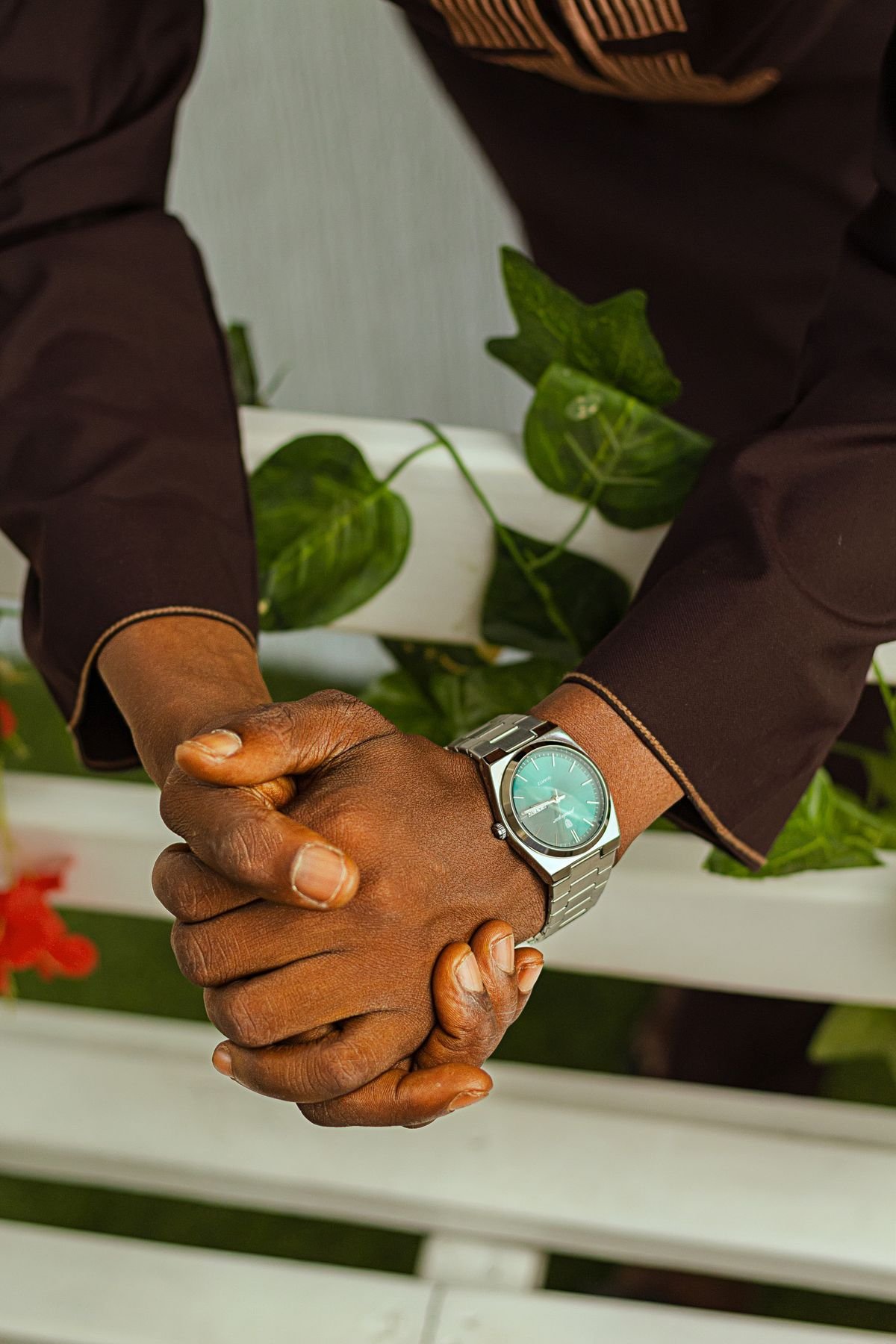
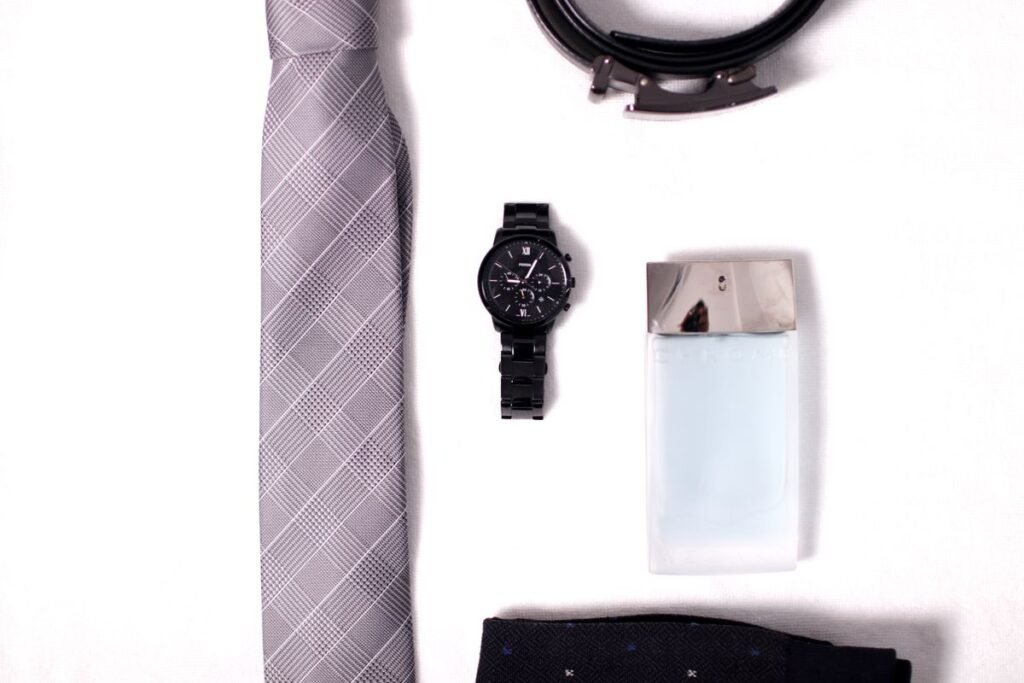
A watch. It is the one accessory people notice first because your wrist moves all day. For your first watch, go simple: a clean dial, a case between 38 and 41mm, and a leather or metal strap in a neutral tone. Avoid giant faces, fake diamonds, and anything with more than three sub-dials. You can read more in our dress watch guide for men.
A belt. Match it to your shoes and you will never look wrong. Start with one black dress belt, slim with a simple buckle. Your second belt should be brown. That covers every outfit you own. Our leather belt buying guide breaks down widths and buckles.
A wallet. Not the overstuffed brick you have had since high school. A slim bifold in brown or black leather, and clean it out twice a year. If your wallet is thicker than your phone, it is ruining the line of your trousers.
These three are the foundation. Everything else is decoration on top of a solid base.
Match the Metal, Match the Mood
Here is the fastest way to look like you know what you are doing: keep your metals consistent. Silver watch, silver belt buckle, silver cufflinks. Gold watch, gold everything else. Mixed metals are not a crime, but matching metals is the safe move while you are learning, and honestly it looks sharper anyway.
Mood matters just as much. Formal accessories are slim, quiet, and simple: thin dress watch, narrow belt, plain buckle. Casual accessories can be chunkier and louder: a field watch, a wide leather belt, a beaded bracelet. The mistake most guys make when figuring out how to pick men’s accessories is wearing a formal piece with a casual outfit or the reverse. A plastic sports watch with a navy suit looks like you got dressed in the dark.
A quick cheat sheet:
| Occasion | Watch | Belt | Extra |
|---|---|---|---|
| Job interview / wedding | Slim dress watch, leather strap | Thin black dress belt | White pocket square |
| Office / business casual | Classic watch, metal or leather | Brown or black belt | Simple card case |
| Date night | Your best watch | Dark belt matching shoes | Light cologne |
| Weekend casual | Field or casual watch | Canvas or leather casual belt | Sunglasses |
| Gym / outdoors | Beater watch or fitness band | None needed | Cap |
How to Pick Men’s Accessories on a Budget
You do not need rich-guy money. You need a priority order. Here is how to build a respectable collection without eating ramen for a month.
- Spend first on what people see most. Watch, then belt, then wallet. These get daily use and daily attention.
- Buy the boring colors first. Black and brown leather, silver and white metals. Wild colors come later, once the basics are covered.
- Set a per-piece ceiling. Decide the most you will spend on any single accessory this year, and stick to it. For most guys starting out, one hundred dollars per piece is plenty.
- Check the materials, not the brand. Full-grain leather, solid stainless steel, and real stitching beat a famous logo on fake leather every time. Flip the belt over. If the back looks like cardboard, walk away.
- Wait 48 hours. See something you love? Wait two days. If you still want it and you know exactly which outfits it goes with, buy it. Impulse buys are how you end up with a drawer of regret.
Unpopular opinion: most “starter luxury” accessories are a trap. A cheap watch with a designer logo looks worse than a no-name watch with honest materials. Nobody is impressed by the logo. Everybody notices the quality.
The Mistakes That Give Beginners Away
Learning how to pick men’s accessories also means learning what not to do. These are the tells that mark a guy as new to this.
Wearing everything at once. Watch, three bracelets, two rings, a necklace, a lapel pin, and a pocket square is not style, it is a jewelry store robbery. Pick two or three pieces max. Let each one breathe.
Ignoring size and proportion. A 46mm watch on a thin wrist looks like a wall clock. A tiny belt buckle on a big frame disappears. Accessories should match your build. Bigger guys can wear chunkier pieces. Slimmer guys should keep things refined.
Buying sets that match perfectly. The tie, pocket square, and cufflinks that came in one gift box look like they came in one gift box. Coordinate, do not clone. Your pocket square should echo your tie, not photocopy it.
Forgetting the shoes. Your accessories and shoes are on the same team. Brown belt with black shoes is the classic beginner error, and people notice it even if they cannot name it.
Caring for What You Buy
Picking well is only half the job. A good leather belt that you never condition will crack. A watch you never service will die. Here is the minimum maintenance that keeps your accessories looking expensive.
- Leather: wipe with a damp cloth monthly, condition twice a year, keep out of direct sun and away from water.
- Metal: a soft polishing cloth once a month keeps steel and silver bright. Store pieces separately so they do not scratch each other.
- Fabric: follow the care label on scarves and pocket squares. Most can be hand washed cold and air dried.
- Watches: a battery change every couple of years for quartz, and keep them away from magnets and hard knocks.
Frequently Asked Questions
How many accessories should a beginner buy first?
Start with three: a watch, a belt, and a wallet. That is the complete starter kit for learning how to pick men’s accessories. Wear those for a month before you buy anything else. You will quickly discover what is missing instead of guessing.
Should all my accessories match each other?
They should coordinate, not match exactly. Keep metals consistent and keep formality levels aligned. Your belt should match your shoes. Beyond that, aim for harmony. Things that look like they belong to the same person on the same day.
Is it okay to wear cheap accessories?
Honest cheap beats fake expensive. A twenty-dollar canvas belt is fine. A twenty-dollar “gold” watch that turns your wrist green is not. Spend on the pieces people touch and see up close: watch, belt, wallet. Save on the rest.
How do I know my personal style?
Look at what you already wear and love. Take a photo of your five favorite outfits. The common thread is your style. Buy accessories that would work with all five. If a piece only works with one outfit, it is a costume, not a wardrobe piece.
Can I mix gold and silver?
You can, but learn the rules before you break them. While you are starting out, keep it simple: one metal per outfit. Once you are comfortable, mixing can work if one metal clearly dominates and the other is a small accent.
The Bottom Line
How to pick men’s accessories comes down to three habits: buy for your real life, start with the basics, and choose fewer better pieces. You do not need a collection. You need a watch that fits, a belt that matches your shoes, and a wallet that is not falling apart. Get those right and everything you add later is just bonus.
This week, audit what you own. Throw out the broken, the fake, and the never-worn. Then buy the one missing basic, the best version you can afford. That single upgrade will do more for how you look than any trend ever will.
Keep learning: check our men’s accessories essentials guide, our how to wear a pocket square, and our watch size guide. For classic inspiration, browse Real Men Real Style and FashionBeans.
About the Author
Biker Jacket Hub Editorial Team — We cover men’s fashion the way real guys actually dress: practical, honest and no fluff. From leather jackets to the small details that finish an outfit, every guide we publish is researched, tested and written to help you look your best without wasting money.