The Origins of Leather Arm Accessories in Early Civilizations
The story of leather arm accessories from medieval times began long before the medieval age. Ancient people used leather to protect their bodies during hunting and battles. Leather was easy to find, flexible, and strong. Early civilizations in Europe, Asia, and the Middle East created simple arm coverings to reduce injuries.
Warriors needed protection without losing movement. This led to the creation of basic arm guards made from animal hides. Over time, leatherworkers improved their skills and made stronger designs. These early items became the foundation for later arm protection.
Many ancient soldiers wore pieces that covered the forearm and wrist. These protective items helped block cuts and scratches. As trade and craftsmanship improved, leather goods became more detailed and durable.
The development of these early designs eventually influenced the leather arm accessories from medieval times that became common among soldiers, hunters, and travelers. Their practical purpose laid the groundwork for centuries of innovation in protective armwear.
The Role of Leather Arm Guards in Medieval Warfare
During the Middle Ages, warfare was a major part of life. Soldiers needed reliable equipment to survive battles. One important item was medieval arm guards. These guards protected the arms from swords, axes, and other weapons.
Leather was widely used because it was lighter than metal and more comfortable to wear. Soldiers could move quickly while still receiving protection. Many fighters wore arm guards beneath metal armor for added safety.
Leather protection was especially useful during long campaigns. It could be repaired more easily than metal equipment. Arm guards also helped reduce bruises and cuts during combat.
As battles became more complex, the design of leather arm accessories from medieval times improved. Craftsmen added layers, straps, and reinforced sections to increase strength. These improvements made leather gear a valuable part of military equipment across Europe.
How Knights Used Leather Arm Protection
Knights were among the most famous warriors of the medieval period. They wore heavy armor, but leather still played an important role in their protection. Many knights used leather vambraces to cover and support their forearms.
Leather pieces often worked together with metal armor. They added comfort and reduced rubbing between metal parts and the skin. This made long hours of riding and fighting easier.
Leather protection also offered flexibility. Knights could grip weapons, hold shields, and control horses without feeling restricted. Some leather items were decorated with symbols that showed family status or military service.
The use of leather arm accessories from medieval times helped knights balance protection and mobility. Even as metal armor became more advanced, leather remained an important material for creating practical and comfortable defensive gear.
Leather Bracers and Archery in the Middle Ages
Archery played a major role in medieval warfare and hunting. Archers needed special equipment to protect themselves while shooting. One popular item was medieval leather bracers.
When an archer released an arrow, the bowstring could strike the forearm. A bracer protected the skin from painful impacts. This simple accessory improved comfort and allowed archers to shoot more accurately.
Many bowmen also used leather archery bracers designed specifically for repeated use. These items were secured with straps and fitted closely to the arm. Their design helped prevent interference with the bowstring.
The popularity of archery increased the demand for leather arm accessories from medieval times. Military forces relied on skilled archers, making arm protection an important part of their equipment. These practical accessories became common among both professional soldiers and everyday hunters.
Materials and Craftsmanship Behind Medieval Arm Accessories
Creating quality leather gear required skill and experience. Craftsmen selected strong hides and treated them carefully. This process helped produce durable pieces of historical leather armor.
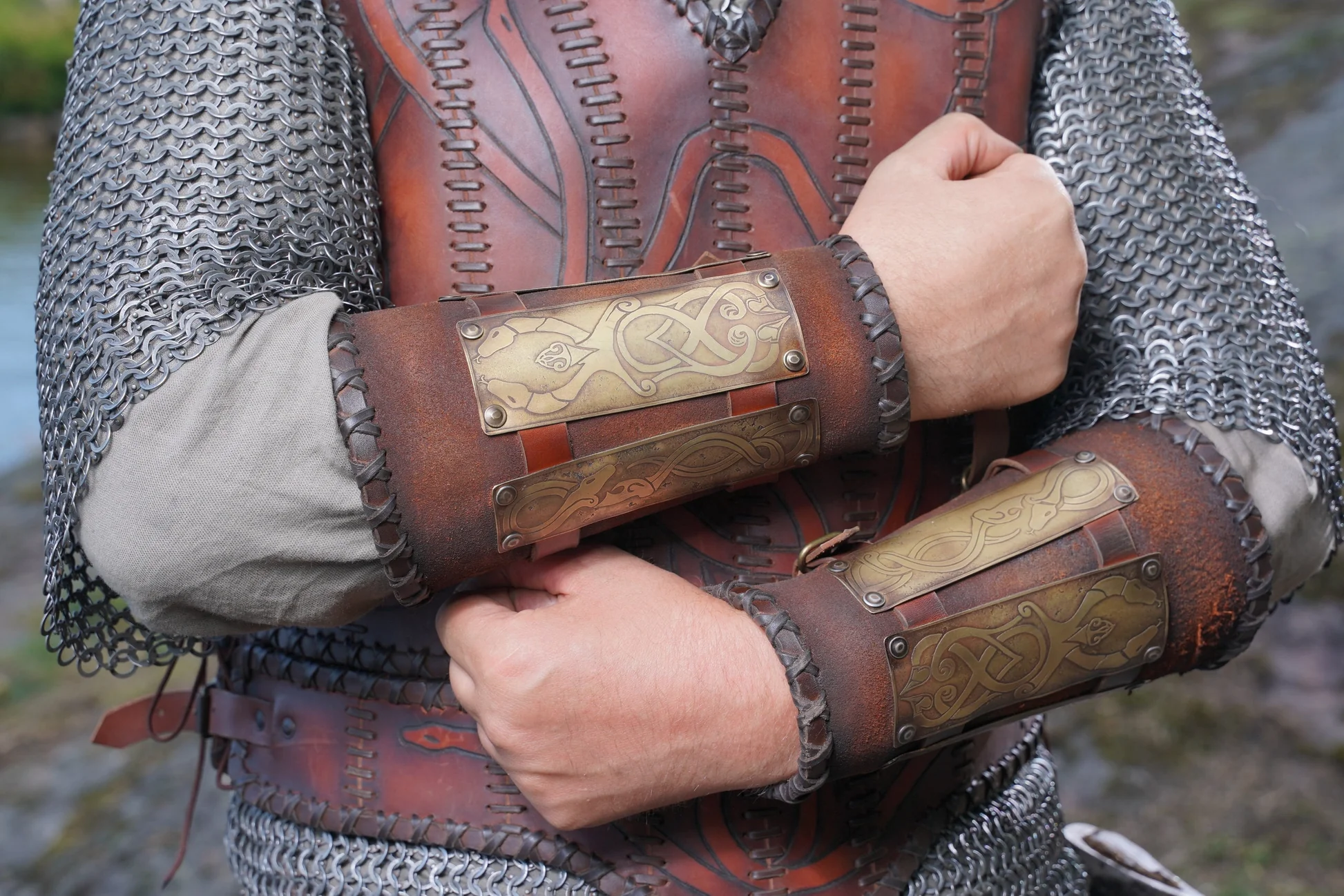
Many artisans specialized in leather armor craftsmanship. They shaped leather using water, heat, and hand tools. Some pieces were hardened to improve protection. Others were decorated with patterns and symbols.
The creation of handcrafted leather bracers required careful measurement and precise cutting. Strong stitching and secure straps ensured a comfortable fit. Quality workmanship often determined how long an item would last.
The success of leather arm accessories from medieval times depended on the abilities of skilled leatherworkers. Their knowledge allowed them to create practical and attractive items that served both protective and decorative purposes.
Regional Variations of Leather Arm Wear Across Europe
Different parts of Europe developed unique styles of arm protection. Local materials, traditions, and military needs influenced these designs. Some regions preferred simple coverings, while others created detailed protective gear.
Northern Europe became known for Viking leather arm guards. These items were practical and suited for harsh environments. Southern regions often included decorative features inspired by local culture.
Certain areas favored lightweight traditional leather armwear for hunting and travel. Others focused on stronger protection for military use. These regional differences helped create a wide variety of designs.
Despite these differences, leather arm accessories from medieval times shared the same goal of protecting the wearer. The diversity of styles reflects the creativity and resourcefulness of medieval craftsmen across Europe.
The Influence of Military Needs on Leather Arm Designs
Military demands greatly influenced the development of arm protection. As weapons changed, armor designs also evolved. Soldiers required equipment that offered both defense and flexibility.
Many forms of medieval combat equipment included leather components. Arm protection became more advanced as battles grew more challenging. Reinforced sections and layered construction improved durability.
Leather was also an important part of medieval military attire. It helped soldiers move comfortably while carrying weapons and supplies. Lightweight protection was especially useful during long marches.
The evolution of leather arm accessories from medieval times shows how military needs encouraged innovation. Designers constantly improved their products to meet the challenges of warfare and battlefield survival.
Leather Arm Accessories Beyond the Battlefield
Leather armwear was not limited to soldiers. Many people used arm protection for daily tasks. Hunters, craftsmen, and travelers often relied on historical arm protection for safety.
Workers used medieval wrist guards to reduce strain and prevent injuries. Some individuals wore leather forearm protection while handling tools or animals. These practical items served many purposes outside warfare.
Leather arm pieces also became popular among merchants and adventurers. Their durability made them useful during long journeys. People appreciated their comfort and protective qualities.
Because of their usefulness, leather arm accessories from medieval times became part of everyday life for many individuals. Their practical design extended well beyond military applications.
The Transition From Functional Gear to Fashion Pieces
As society changed, leather armwear began to serve decorative purposes. People started wearing leather arm bands and other accessories to express personal style.
Some designs became part of medieval fashion accessories rather than protective equipment. Decorative stitching, embossing, and custom patterns increased their appeal.
Members of wealthy families often commissioned unique pieces that displayed status and identity. Fashion and function gradually blended together.
This shift allowed leather arm accessories from medieval times to gain popularity beyond their original purpose. They became symbols of craftsmanship, culture, and individuality.
Renaissance Changes in Leather Arm Accessories
The Renaissance brought new ideas to art, fashion, and craftsmanship. Leatherworkers experimented with fresh techniques and decorative styles.
During this period, renaissance leather bracers became more refined. Many featured detailed designs and artistic elements. Function remained important, but appearance gained greater attention.
The era also influenced period leather accessories used in ceremonies and special events. People valued beautifully crafted items that reflected changing tastes.
These developments helped transform leather arm accessories from medieval times into products that combined protection, beauty, and artistic expression.
The Revival of Medieval Leather Armwear in Modern Culture
Interest in medieval history remains strong today. Books, movies, and games have introduced new audiences to medieval warrior accessories and historical clothing.
Many people admire the appearance of authentic medieval armor and related equipment. This interest has encouraged modern craftsmen to recreate historical designs.
Fans of fantasy stories often wear leather arm pieces inspired by medieval examples. These accessories connect modern culture with the past.
The continuing popularity of leather arm accessories from medieval times demonstrates their lasting appeal and historical significance.
Leather Arm Accessories in Historical Reenactments
Historical reenactments allow people to experience the past in a hands-on way. Participants often wear accurate clothing and equipment from specific periods.
Many reenactors use medieval reenactment gear to recreate authentic appearances. Leather armwear helps complete these historical outfits.
Quality historical reenactment accessories are often based on research and archaeological evidence. Accuracy is important for educational demonstrations and public events.
For reenactors, leather arm accessories from medieval times provide both authenticity and practical value. They help bring medieval history to life for modern audiences.
Modern Uses Inspired by Medieval Leather Designs
Today, medieval-inspired armwear serves many purposes. Some people wear it during festivals, while others use it for costume events.
Designers create medieval costume accessories inspired by historical examples. These products often blend traditional styles with modern comfort.
Many enthusiasts appreciate knightly equipment and leather battle gear as part of hobby activities, role-playing events, and themed gatherings.
Modern interest continues to keep leather arm accessories from medieval times relevant. Their designs inspire creative products that appeal to a wide range of people.
Preserving and Collecting Historical Leather Arm Accessories
Preserving old leather items requires care and attention. Museums and collectors work to protect valuable examples of medieval leatherwork.
Experts study these objects to learn about history, craftsmanship, and daily life. Collections often include examples of medieval protective gear and rare armwear.
Many collectors also seek medieval artisan leather goods because of their historical and artistic value. Proper storage helps prevent damage from moisture and sunlight.
The preservation of leather arm accessories from medieval times ensures that future generations can learn from these important historical objects.
The Lasting Legacy of Medieval Leather Arm Accessories
The influence of medieval leather armwear continues today. These items represent skill, creativity, and practical problem-solving.
From simple protective gear to detailed decorative pieces, leather armwear has served many purposes throughout history. The evolution of knight arm armor and related accessories reflects changing needs and technologies.
Modern craftsmen still create leather gauntlet alternatives and other designs inspired by historical examples. Their work keeps traditional methods alive.
The story of leather arm accessories from medieval times remains an important part of history. Their legacy can be seen in museums, reenactments, fashion, and modern craftsmanship. These enduring designs continue to inspire people around the world.